The Complete Seasonal Home Maintenance Checklist: Spring, Summer, Fall and Winter

The average American homeowner spent $8,808 on home maintenance in 2025, according to Bankrate [1]. That number covers routine upkeep, surprise repairs and replacements, and how it splits between those three is largely up to you.
Industry research suggests preventive maintenance cuts overall repair costs by roughly 30%, while the average deferred repair, the thing put off until it became urgent, now costs more than $5,600 to fix [2]. The routine job that would have prevented it usually costs a fraction of that. A $150 HVAC tune-up heads off a $4,000 compressor failure. A $200 gutter cleaning heads off $8,000 in foundation water damage. A $20 filter heads off a $600 blower motor.
The math isn’t subtle. The problem is that nobody wakes up on a Saturday excited to check their water heater, and maintenance is easy to understand and even easier to forget. A checklist broken into seasons is the simplest fix. Here it is.
Looking for how often each task should happen rather than when? See How Often Should You Do Every Home Maintenance Task?
The Year at a Glance
| Season | The focus | Don’t skip |
|---|---|---|
| Spring (Mar–May) | Catch winter damage | Roof and gutter check, AC tune-up, sump pump test |
| Summer (Jun–Aug) | Keep systems efficient | Condenser clearance, dryer vent, deck sealant test |
| Fall (Sep–Nov) | Winterize, and book it early | Furnace tune-up, outdoor faucets, gutters after leaf fall |
| Winter (Dec–Feb) | Monitor and prevent freeze damage | Monthly filter changes, ice dams, pipes during cold snaps |
Spring (March – May): Post-Winter Recovery
Winter is hard on a house. Spring maintenance is about catching what the cold season damaged before it gets worse.
HVAC system. Schedule a professional tune-up before cooling season starts. The technician will clean the coils, check refrigerant, inspect the blower motor and confirm the thermostat is calibrated. Replace the air filter, or clean it if it’s reusable. A clogged filter makes the system work harder, which shortens its life and raises energy bills.
Roof and gutters. Inspect the roof from the ground with binoculars. Look for missing, cracked or curling shingles, and flashing that has pulled away from chimneys or vents. Clean the gutters and downspouts, because winter debris compacts and blocks drainage just when spring rain arrives. Make sure downspouts discharge at least 4 feet from the foundation.
Exterior. Walk the perimeter. Look for foundation cracks, gaps in caulking around windows and doors, peeling paint, and any wood that feels soft or spongy (a sign of rot). Re-caulk and seal where needed. Spring is the cheapest time to catch exterior damage, before summer heat speeds it up.
Plumbing. Turn on the outdoor faucets and check for leaks or low pressure, a sign the supply line froze. Check under every sink and around every toilet for moisture. Test the sump pump by pouring a bucket of water into the pit: it should start, pump the water out and shut off on its own.
Electrical and screens. Press the test button on every GFCI outlet in bathrooms, the kitchen and outside. Repair or replace torn window and door screens before bug season.
Lawn and landscape. Dethatch if needed, reseed bare spots and apply a spring fertilizer. Trim branches that overhang the roof or touch the house. They’re highways for pests and a major source of gutter clogs.
Summer (June – August): Peak Performance Season
Everything runs hardest in summer. This season is about keeping systems efficient and catching problems while the weather gives you time to fix them.
Air conditioning. Keep the outdoor condenser clear of debris, weeds and plants, with at least 2 feet of clearance on all sides. Listen for unusual sounds. If the system cycles on and off rapidly or cools unevenly, call for service now, before the August heat wave books every HVAC company in town for weeks.
Water heater. Test the temperature-pressure relief valve by lifting the lever briefly. Water should flow freely and stop when you let go; if it drips or doesn’t flow, the valve needs replacing. Keep the temperature at 120°F, the recommended maximum for safety and efficiency. If a tank heater is more than 5 years old, flush it to clear sediment.
Dryer vent. Clean the full vent duct, not just the lint trap. Lint buildup in the duct is a fire risk and makes the dryer run longer.
Windows and doors. Replace weather stripping that’s cracked or flattened, and check that every window opens, closes and locks.
Deck and patio. Look for loose boards, popped nails and soft or discolored wood. Clean the surface and reseal if the last coat is more than two years old. To check, sprinkle water on the deck. If it beads up, the sealant is still working; if it soaks in, it’s time. (More in Deck and Fence Care.)
Irrigation and attic. Run every irrigation zone, adjust the heads and look for leaks before peak watering season. In the attic, make sure the vents aren’t blocked; good airflow keeps moisture down and cooling costs lower.
Pest check. Walk the perimeter for ant trails, wasp nests, termite mud tubes on the foundation, and gaps where small animals could get in. Summer is peak pest season, and catching an infestation early is the difference between a $200 treatment and a $2,000 one.
Fall (September – November): Winterize, and Book It Early
Fall is the most consequential season for homeowners in cold climates. Everything done now prevents the expensive winter failures.
Start in late summer if you can. The last weeks of summer are the most overlooked maintenance window of the year. The weather is still mild enough to work outside, and roofers, chimney sweeps and HVAC companies book up fast once cold weather hits, so scheduling now gets you ahead of the queue [5][6]. Small problems are also easier and safer to fix at 60 degrees than in the first cold snap [6].
Heating system. Schedule a furnace, boiler or heat pump tune-up before the first cold night. The technician will inspect the heat exchanger, clean the burners, check the ignition and test the safety controls [7]. Replace the filter. If you have a wood fireplace or stove, have the chimney inspected and cleaned before the first fire; creosote buildup is a fire hazard. (See Before the First Fire.)
Outdoor faucets and pipes. Disconnect and drain every garden hose. A hose left connected is frequently cited as the top cause of frozen outdoor pipes [10]. Shut off the interior valve that feeds the outdoor spigots and open the spigot to drain it. Insulate exposed pipes in unheated spaces: the garage, crawl space, attic and along exterior walls. Freezing pipes are among the leading causes of winter water damage claims [3]. If you have an irrigation system, drain the lines too. (More on when pipes actually freeze in The 20-Degree Rule.)
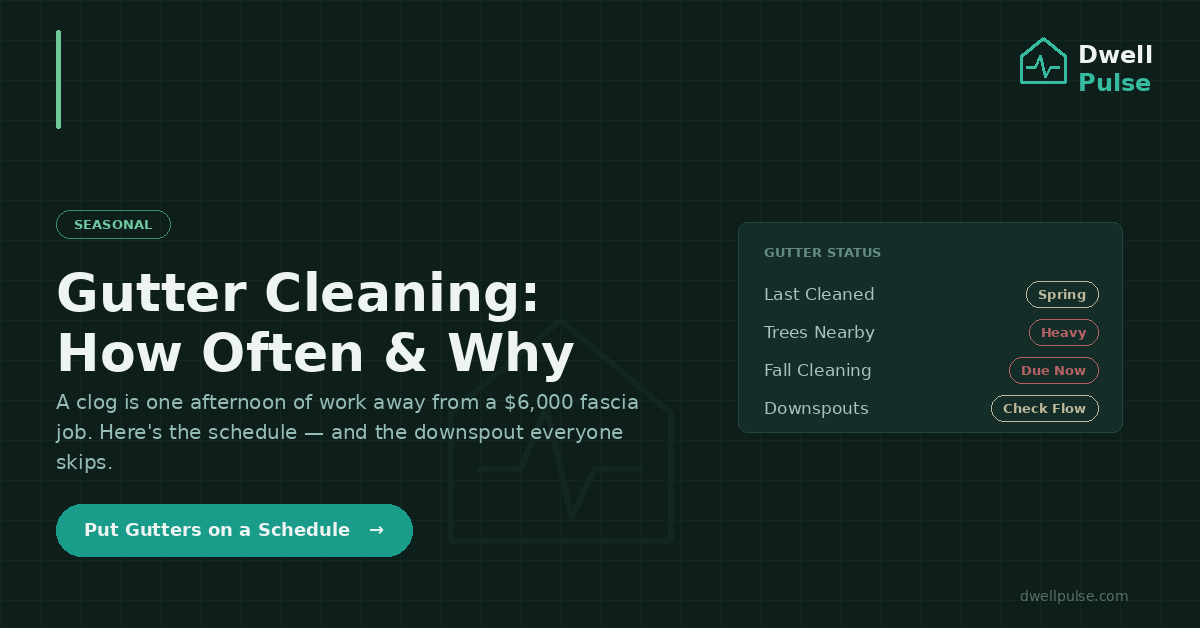
Gutters and roof, again. Clean the gutters a second time after the leaves fall. Clogged gutters can’t drain, and in winter the trapped water forms ice dams that push water under the shingles and into the house [8]. Check that every downspout is attached and draining away from the foundation, and look over the roof for summer storm damage.
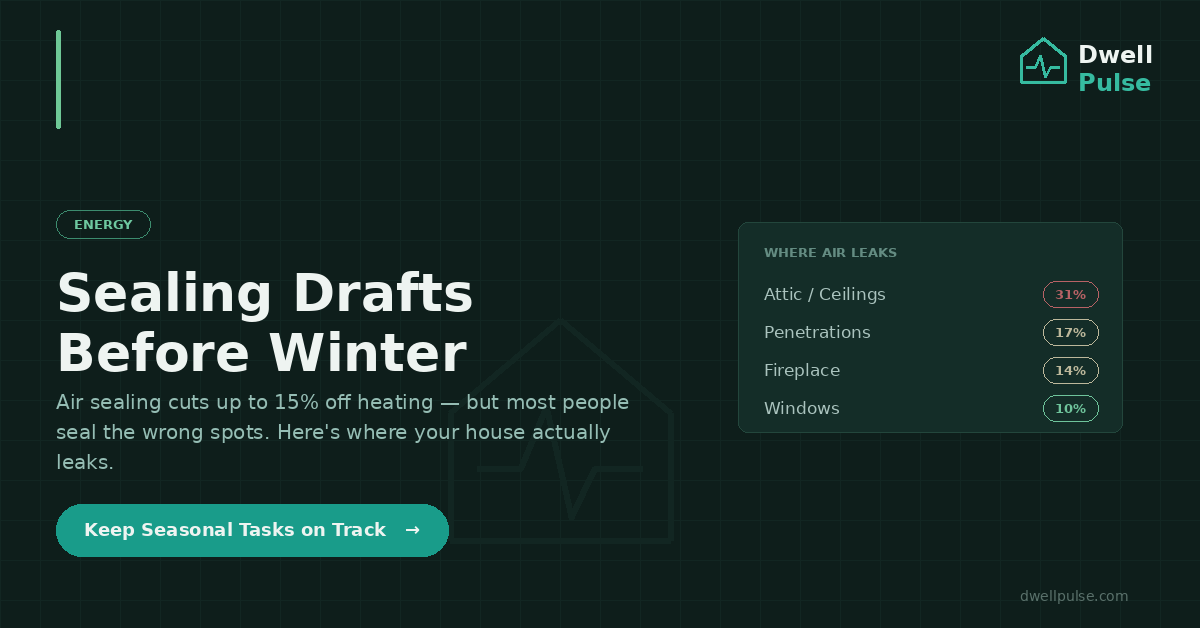
Air sealing and insulation. Caulk and replace weather stripping around windows, doors and other openings. Proper sealing can cut heating costs by up to 20% [9]. Add attic insulation if needed; the DOE recommends R-38 to R-60 for most attics, depending on climate zone. Reverse ceiling fans to clockwise on low to push warm air down.
Yard and outdoor gear. Late summer into early fall is the window for overseeding, aerating and fall fertilizer [5]. Trim dead branches near the house before winter storms bring them down. Fill and reseal driveway cracks before freeze-thaw cycles widen them [5]. Clean and service the mower and other summer equipment before storing it.
Safety devices. Test every smoke and carbon monoxide detector and replace the batteries. Heating season is the highest-risk period for carbon monoxide exposure [7].
Winter (December – February): Monitor and Protect
Winter is the lightest season for maintenance because most of the work is already done. The focus shifts to watching for the sudden failures cold weather causes.
Know where your main water shutoff is. If a pipe bursts, you have seconds, not minutes. Make sure everyone in the house knows where it is and that it turns.
Heating system. Change the air filter monthly during heavy use. Keep the area around the furnace clear of storage. If you have a heat pump, clear snow and ice off the outdoor unit after storms.
Ice dams. Icicles and ice dams at the eaves usually mean warm air from the house is melting snow higher on the roof, which then refreezes at the cold edge and backs up under the shingles. In the short term, a roof rake can clear snow from the first 3 feet of the eave. The long-term fix is attic insulation and unblocked soffit vents.
Pipes and fixtures. During cold snaps, open cabinet doors under sinks on exterior walls so warm air reaches the pipes. Run water briefly in rarely used fixtures, like a guest bath or basement sink, to keep their traps full; a dry trap lets sewer gas into the house.
Basement and sump pump. Check the basement for condensation or seepage and deal with it before mold sets in. Make sure the sump pump works before the spring thaw.
Before a winter trip. For any trip longer than 3 days, set the water heater to vacation mode, shut off the main water supply, drain the lines and never set the thermostat below 55°F.
The Real Cost of Skipping It
The financial case isn’t abstract. Nearly half of homeowners (46%) say they didn’t accurately estimate repair costs before buying, and more than a third (36%) believe the previous owner cut corners on maintenance [4]. Buyers of older homes can face up to 4 times more in unexpected first-year costs, largely from deferred maintenance [2].
Every skipped gutter cleaning and postponed tune-up compounds. The $150 saved by skipping the fall furnace inspection becomes the $3,500 cracked heat exchanger in January. Maintenance is boring until it’s expensive.
Why a Checklist Alone Isn’t Enough
Every seasonal checklist, this one included, only works if you actually do it every season and remember what you did. Did the furnace get serviced last year or the year before? Was the chimney swept? The tasks that prevent the most damage are the recurring ones, and their value comes from consistency, which is exactly what good intentions struggle to deliver.
How DwellPulse Helps
DwellPulse turns this checklist into a schedule that runs itself:
- Set each task as a recurring reminder (the fall furnace tune-up, gutters twice a year, detector tests), tied to the system it belongs to.
- Log each job when it’s done and attach the invoice, so you always know what happened last season and can prove the work was done when a warranty, insurer or buyer asks.
- DwellPulse watches the National Weather Service forecast for your home, so freeze-sensitive jobs don’t sneak up on you.
Every completed task becomes part of your home’s history, which you can hand to the next owner when you sell.
Build your seasonal maintenance schedule →
Sources:
- Bankrate, “Hidden Costs of Homeownership 2025”: average annual maintenance spend of $8,808.
- Pearl, “Home Maintenance Cost: Annual Report 2026” (February 2026): average deferred repair of $5,600, preventive maintenance cutting costs by about 30%, and the first-year cost gap for older homes.
- Insurance Information Institute, via This Old House: water damage and freezing claims peak in January and February.
- Real Estate Witch, “The True Cost of Owning a Home in 2025” (January 2026): 46% underestimated repair costs; 36% believed the previous owner cut corners.
- Fowler Sakey Team, “August Home Maintenance Checklist” (August 2025): booking roof and chimney inspections early, sealing driveways before freeze-thaw, and late-summer lawn work.
- Maids of MovHer, “Ultimate Checklist for Preparing Your Home for Fall” (June 2026), and Chad Langseth, “Before the Leaves Fall” (August 2025): catching roof issues in mild weather and fall booking rushes.
- State Farm, “Fall Home Maintenance Checklist” (May 2026): servicing the heating system and testing smoke and CO detectors.
- Insurance Information Institute, via AAA Northeast, “Fall Home Maintenance Tasks”: clogged gutters causing ice dams and interior leaks.
- Maids of MovHer and My Home Platform, “Fall Home Preparation Checklist” (July 2025): air sealing cutting heating costs by up to 20%.
- Living Large in a Small House, “Seasonal Home Maintenance Checklist” (June 2026): connected hoses as a leading cause of frozen outdoor pipes.
* This article was written with the assistance of AI tools. All content is reviewed and edited by Josh Standeven.
Related guides

Ready to take control of your home?
DwellPulse is free to start — track maintenance, projects, appliances, and your garden all in one place.
Start Free Today →