The End-of-Summer Home Maintenance Checklist: Get Ready for Fall Before It Arrives
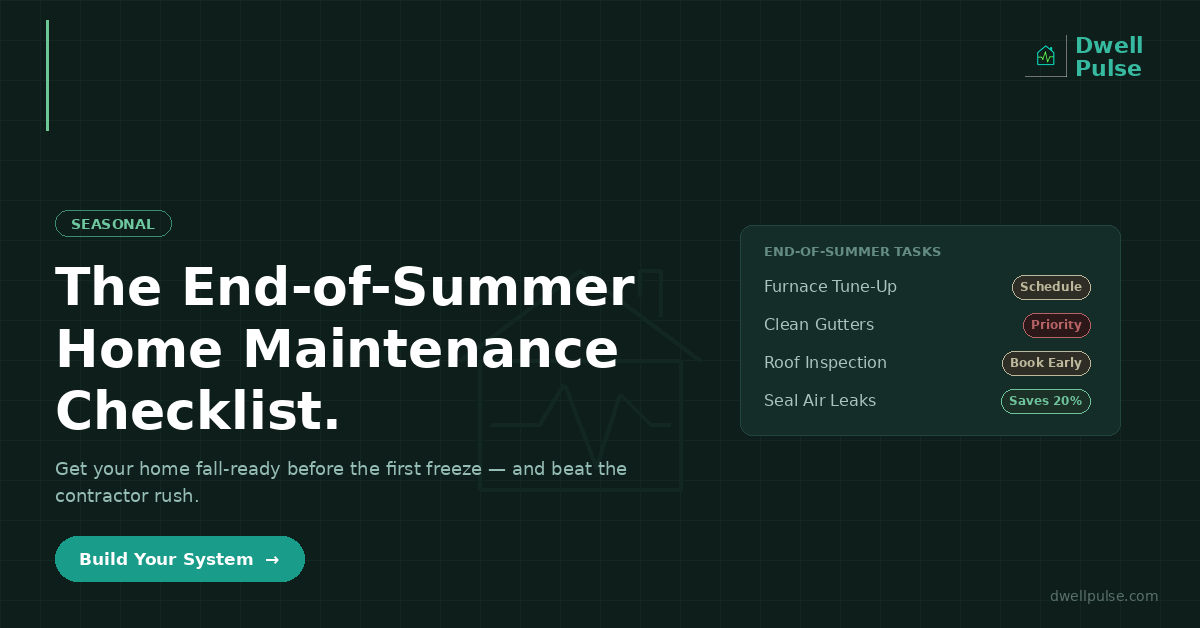
The last stretch of summer is the most valuable — and most overlooked — maintenance window of the year. The weather is still mild enough to work outside comfortably, contractors aren’t yet slammed with cold-weather emergencies, and everything you do now prevents the expensive failures that arrive with the first freeze. Wait until fall is fully here and you’re competing for booked-up HVAC techs and roofers, working in worse weather, racing the calendar.
This is the checklist to work through in the final weeks of summer, organized by priority. Tackle these before the leaves fall and you head into winter protected, efficient, and ahead of the rush.
Why Timing This Right Matters
There’s a genuine advantage to doing this work at the end of summer rather than the middle of fall. Roofing companies and HVAC services book up fast once cold weather hits — schedule an inspection now and you skip the queue [1]. The tasks themselves are also easier and safer in mild weather: it’s much simpler to fix a roof leak or a drafty door in 60-degree weather than during the first cold snap [2]. And critically, some of these tasks prevent damage that’s already being set in motion — a small roof issue or a clogged gutter left through fall becomes a winter water-damage claim.
The through-line of every task below: catching a small problem now costs a fraction of what the same problem costs after it’s compounded through a hard winter.
The Priority Tasks (Do These First)
These four have the highest stakes — they prevent the most expensive cold-weather failures.
1. Service your heating system. Before you need heat, make sure it’s ready. Schedule a professional furnace or heat pump tune-up and replace the filter. A technician will inspect the heat exchanger, clean the burners, and test safety controls — catching problems now rather than on the first cold night when every HVAC company is booked solid [3]. This is the single most important end-of-summer task in cold climates.
2. Clean the gutters and downspouts. This is the one professionals call “the big one.” Clogged gutters can’t drain, and in winter that trapped water forms ice dams that force water up under your shingles and into the house — a leading cause of winter water damage, according to the Insurance Information Institute [4]. Clear out summer debris and seed pods, and make sure downspouts carry water at least a few feet from the foundation.
3. Inspect the roof. Summer heat, UV, and storms take a toll. Look (from the ground with binoculars, or hire a pro) for missing, curling, or damaged shingles and for flashing that’s pulled away from chimneys and vents. A small issue caught now is a cheap repair; the same issue discovered mid-winter, after water has been getting in for months, is not [2]. Schedule the inspection early — fall is peak season for roofers.
4. Seal air leaks. Gaps around windows, doors, and other penetrations let heated air escape and force your system to run constantly all winter. Caulk and add or replace weatherstripping now. According to fall-prep guidance, proper sealing can cut heating costs by up to 20% — one of the highest-return tasks on this list [5].
The Water and Pipe Tasks
Winter’s most common catastrophic failure is a burst pipe, and the prevention work happens now.
5. Winterize outdoor faucets before the first hard freeze. Disconnect and drain all garden hoses — leaving a hose connected is frequently cited as the number-one cause of frozen outdoor pipes [6]. Shut off the interior valve that feeds exterior spigots and drain the remaining water.
6. Insulate exposed pipes in unheated spaces — the garage, crawl space, attic, and along exterior walls — before temperatures drop.
7. Winterize your irrigation system if you have one, draining the lines so trapped water doesn’t freeze and crack them.
The Outdoor and Yard Tasks
8. Give the lawn its fall attention. Late summer into early fall is the ideal window for overseeding, aerating, and applying a fall fertilizer — the work that determines how your lawn comes back in spring [7].
9. Trim trees and dead branches near the house before winter storms and ice can bring them down onto your roof, gutters, or power lines.
10. Seal driveways and walkways. Fill cracks and reseal now, before fall rain and winter freeze-thaw cycles widen them into real damage [1].
11. Store and winterize outdoor equipment — clean and put away summer tools, and service what needs it (mower, trimmer) before storage.
The Safety Tasks (Don’t Skip These)
12. Test every smoke and carbon monoxide detector and replace the batteries. Heating season is the highest-risk period for carbon monoxide exposure, which makes this a genuine safety priority, not a formality [3].
13. Have the chimney inspected and cleaned if you use a wood-burning fireplace or stove — before you light the first fire, and before the sweeps book up for the season [1].
14. Check attic insulation and ventilation. Adequate insulation and clear soffit vents prevent the warm-air buildup that causes ice dams, and keep heating costs down all winter.
Why a Checklist Alone Isn’t Enough
Here’s the catch with every seasonal checklist, including this one: it only works if you actually do it, every season, and remember what you did. Most homeowners read a list like this, mean to get to it, and then lose track — did the furnace get serviced last year or the year before? Was the chimney swept? Which of these did I actually finish?
The tasks that genuinely prevent damage are the recurring ones — the annual furnace tune-up, the twice-yearly gutter cleaning, the detector tests. Their value comes from consistency, and consistency is exactly what a paper checklist or good intentions can’t reliably deliver.
How DwellPulse Helps
DwellPulse turns a seasonal checklist into a system that actually runs. Set these tasks as recurring reminders — the furnace tune-up every fall, gutter cleaning twice a year, detector tests, faucet winterization — each tied to the specific system it relates to, so nothing gets forgotten until it becomes a winter emergency. Log each task as you complete it and attach the service invoice, building a maintenance record that proves the work was done (the kind warranties and insurers often require). Because DwellPulse integrates with the National Weather Service, it can flag the approaching cold so you complete the freeze-sensitive tasks in time. And with everything tied to your home’s systems, you’ll always know what you did last season instead of guessing. Get the list done once, set it to recur, and every fall after this one takes care of itself.
Build your seasonal maintenance system →
Sources: [1] Fowler Sakey Team, “August Home Maintenance Checklist,” August 2025, on scheduling roof/chimney inspections early before fall booking rushes and sealing driveways before freeze-thaw. [2] Maids of MovHer, “Ultimate Checklist for Preparing Your Home for Fall,” June 2026, and Chad Langseth, “Before the Leaves Fall,” August 2025, on catching roof issues in mild weather and roofers booking up in fall. [3] State Farm, “Fall Home Maintenance Checklist,” May 2026, on servicing the heating system, testing smoke and CO detectors, and tasks best left to professionals. [4] Insurance Information Institute via AAA Northeast, “Fall Home Maintenance Tasks,” on clogged gutters causing ice dams and interior water leaks. [5] Maids of MovHer and My Home Platform, “Fall Home Preparation Checklist,” July 2025, on air sealing reducing heating costs by up to 20%. [6] Living Large in a Small House, “Seasonal Home Maintenance Checklist,” June 2026, on disconnected hoses being a leading cause of frozen outdoor pipes. [7] Fowler Sakey Team, on late-summer lawn seeding and bed prep for fall.
* This article was written with the assistance of AI tools. All content is reviewed and edited by Josh Standeven.
Ready to take control of your home?
DwellPulse is free to start — track maintenance, projects, appliances, and your garden all in one place.
Start Free Today →