The Paint Color You'll Never Remember: A Homeowner's Guide to Touch-Up Sanity
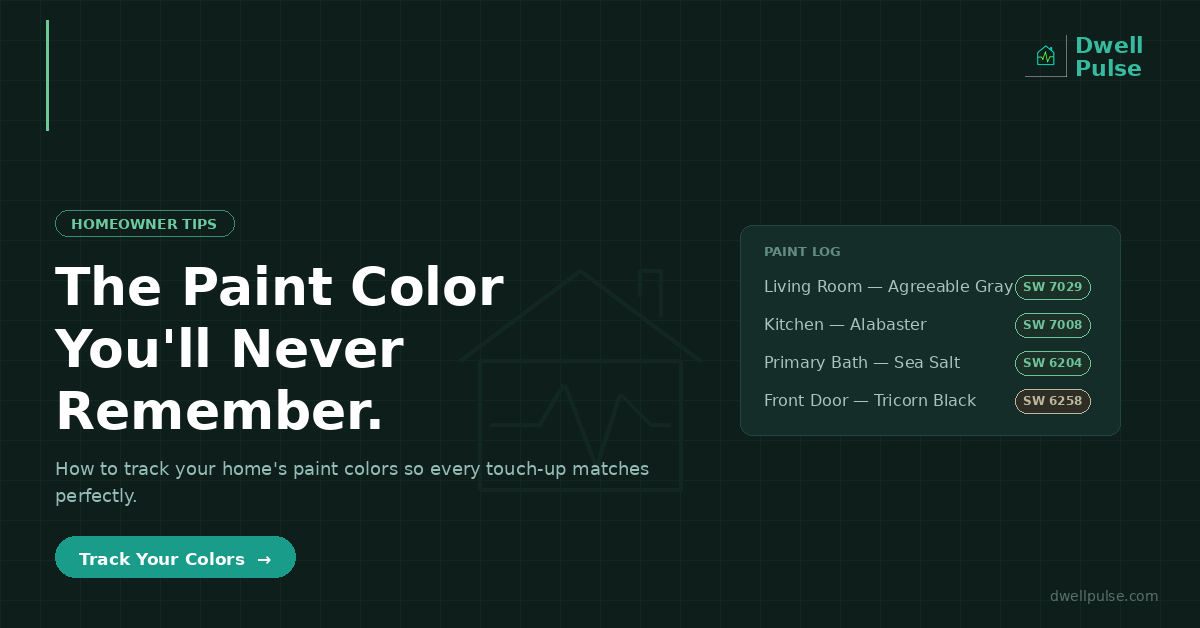
You painted the living room a specific shade of warm gray three years ago. Last night a dining chair got shoved into the wall and now there’s a scuff the size of a half-dollar. You head to the basement, stare at six unlabeled paint cans, and realize you have no idea which one is which — or whether any of them are still good.
This is one of the most universal homeowner frustrations, and one of the most preventable. A few minutes of documentation at the time you paint can save hours of trial-and-error, a trip to the paint store with a chunk of drywall in a plastic bag, and the particular heartbreak of realizing your touch-up paint doesn’t match because the can was stored in a hot garage for two summers.
Why Touch-Ups Go Wrong
Even when you think you’re using the “same” paint, touch-ups fail for reasons most homeowners don’t anticipate.
- Brand matters more than color name. Sherwin-Williams’ “Alabaster” is not the same as Behr’s “Alabaster.” Every manufacturer uses its own base formulation, pigments, and color library, so a color name alone won’t get you a match [1].
- Product line matters within a brand. Sherwin-Williams Emerald, Duration, and ProClassic are all different paints, with different sheens, opacities, and dry times — even in the same color. “Agreeable Gray in Sherwin-Williams” isn’t specific enough for a reliable touch-up.
- Sheen is a separate variable. Flat, matte, eggshell, satin, semi-gloss, and gloss all look different in the same color. Touch up an eggshell wall with satin paint and you’ll see a shiny patch under any direct light [1].
- Stored paint changes. Opened paint stored in a temperature-controlled space (a finished basement, a closet) generally lasts about 2 years. Paint stored in a garage, attic, or shed often fails much sooner because extreme temperature swings break down the binders and pigments [2]. A can that looks fine on the outside can still be unusable inside.
- Walls age. Even if you match the paint perfectly, a three-year-old wall has faded slightly from sun exposure, absorbed some household oils, and collected a layer of dust. A fresh touch-up in the exact same paint can sometimes look brighter than the surrounding wall. “Feathering” the edges with a dry brush and painting corner-to-corner on prominent walls solves most of this.
What to Actually Record
When you paint a room — or when you’re cataloging paint you already have — you need seven pieces of information. Miss any of them and the next homeowner project gets harder.
- Brand (Sherwin-Williams, Behr, Benjamin Moore, Valspar, Farrow & Ball, etc.)
- Product line (Emerald, Marquee, Aura, Regal Select)
- Color name (exact, as printed on the label)
- Color code / ID number (the part nobody writes down — but it’s what mixes the paint)
- Sheen (flat, matte, eggshell, satin, semi-gloss, gloss)
- Room or surface (living room walls, primary bedroom ceiling, front door)
- Date purchased or applied
A photograph of the label on the can covers most of it. The snag is that physical cans get damaged, labels smudge, and cans get thrown out during garage cleanouts. A photograph in your phone camera roll gets lost among 12,000 other photos the moment you scroll past it.
Storing Leftover Paint So It Actually Lasts
Even with perfect records, the paint itself has to survive until you need it.
- Close the can correctly. Wipe the rim clean before sealing. Use a rubber mallet or place a block of wood on the lid and tap with a hammer — a bare hammer dents the lid and breaks the seal [3]. Some painters lay a sheet of plastic wrap over the opening before sealing to create a secondary barrier against air.
- Store somewhere climate-stable. A closet, a finished basement, or a utility room. Avoid garages, attics, and sheds. Don’t set cans on cold concrete floors; put them on a piece of cardboard.
- Transfer to a smaller container for touch-ups. A gallon can with six ounces of paint at the bottom has a lot of air in it, and air oxidizes paint. Transferring leftovers to a small glass jar or a purpose-made touch-up cup dramatically extends usable life. Label the small container clearly — brand, color, code, sheen, room — because a transparent jar of gray paint looks the same as every other jar of gray paint.
- Date the container. Write the open date somewhere on the can or jar. Water-based (latex) paint, stored properly, is generally usable for about 2 years after opening. Oil-based paint lasts longer. Unopened, stored cans can last 7 to 12 years in the right conditions [4].
When You’ve Already Lost the Information
Most homeowners inherit at least a few rooms’ worth of mystery paint — from a previous owner, from a painter who took the cans with them, or from their own pre-tracking days. You have three options, in order of cost and accuracy.
- Check for hidden clues first. Previous painters sometimes write the color code in pencil on the back of a door jamb, inside a closet, on a wall behind a baseboard, or inside the attic access panel. It’s worth a ten-minute look.
- Color-match a chip. Most paint retailers will scan a chip of the original paint and mix you a close match. Carefully cut a small square from a hidden spot (inside a closet, behind a piece of furniture). The match is usually good but rarely perfect — brand, sheen, and product line differences still apply.
- Just repaint the wall corner-to-corner. For a prominent wall where perfect matching matters, starting fresh with a new gallon and rolling the entire wall (from corner to corner, so any color difference lines up with a natural break) will always look better than a failed touch-up.
How DwellPulse Helps
DwellPulse has a dedicated paint tracker built for exactly this problem. Log every color you use — brand, product line, color name and code, sheen, coverage, and which rooms it’s in — and attach a photo of the can label so the record is bulletproof. Store purchase date and location so you know when to toss old paint and where to get a fresh gallon. The next time a wall needs a touch-up, everything you need is in your pocket in thirty seconds, not lost to a smudged label in a cold garage.
Start tracking your home’s paint colors →
Sources: [1] Home Painting Advice, “Never Forget a Paint Color Again,” June 2025. [2] A Touch of Color Painting, “Storing Leftover Paint for Future Use,” February 2026. [3] Sherwin-Williams, “How to Get Paint Touch-Ups to Match Up,” Sherwin-Williams pro guide. [4] The Raleigh Paint Contractor, “Storing Paint,” February 2026.
*Writing assisted by AI
Ready to take control of your home?
DwellPulse is free to start — track maintenance, projects, appliances, and your garden all in one place.
Start Free Today →