What Does a Home Warranty Actually Cover? (And What It Doesn't) — 2026 Guide
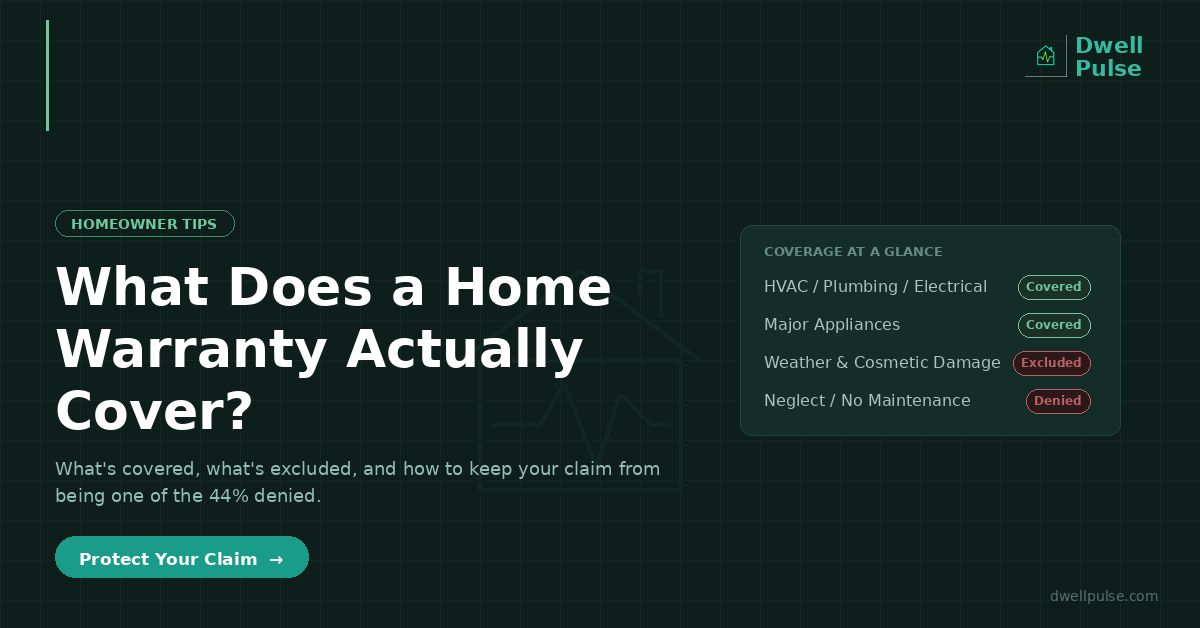
The short answer: generally a home warranty covers the repair or replacement of major home systems and appliances when they break down from normal wear and tear — things like your HVAC, plumbing, electrical, water heater, and kitchen appliances. It does not cover damage from weather, accidents, cosmetic issues, or items that failed due to lack of maintenance.
That last exclusion is where most homeowners get burned. Understanding the difference between what a warranty covers and what it excludes — and how to keep a claim from being denied — is the difference between a warranty that saves you thousands and one that feels like a monthly bill for nothing. Here’s the complete picture.
What Is a Home Warranty? (It’s Not Insurance)
The most important thing to understand up front: a home warranty is a service contract, not an insurance policy [1]. This distinction is the source of most homeowner confusion.
- Homeowners insurance covers sudden, accidental damage — a kitchen fire, a burst pipe, a tree falling on the roof, theft. It’s required by mortgage lenders.
- A home warranty covers gradual mechanical failure — the dishwasher that stops draining, the water heater that gives up, the AC that quits in July. It’s always optional.
Because it’s a service contract rather than insurance, a home warranty is regulated differently and doesn’t carry the same consumer protections [1]. The two products cover completely different situations, and neither replaces the other.
What a Home Warranty Covers
Coverage is typically divided into systems and appliances, and plans are sold as systems-only, appliances-only, or combination plans [2].
Systems coverage typically includes:
- Heating and air conditioning (HVAC)
- Electrical systems
- Plumbing systems
- Water heaters
- Ductwork
Appliance coverage typically includes:
- Refrigerator
- Oven, range, and cooktop
- Dishwasher
- Built-in microwave
- Garbage disposal
- Washer and dryer
Premium or add-on coverage may include pools and spas, well pumps, septic systems, sump pumps, and sometimes limited roof-leak coverage — usually for an additional annual fee [3].
The trigger for coverage is always the same: a covered item breaks down due to normal mechanical wear and tear, not accident, neglect, or weather [4].
What a Home Warranty Does NOT Cover
This is the fine print that catches people off guard. The most common exclusions are:
- Pre-existing conditions — problems that existed before your coverage started. This is the single most common reason claims are denied [4].
- Lack of maintenance — failures caused by neglect, like a clogged filter, dirty coils, or an un-flushed water heater. Most plans explicitly exclude these [4].
- Improper installation — items not installed to manufacturer specifications. A frequent grey area in claim disputes [4].
- Cosmetic damage — dents, scratches, and rust that don’t affect function. Only mechanical failure is covered.
- Weather and disaster damage — floods, hurricanes, storm damage, and frozen pipes from improper winterization. That’s homeowners insurance territory, not the warranty [4].
- Code upgrades — if a repair requires bringing your home up to current building code, those extra costs are typically excluded.
- Secondary damage — damage caused by a failed component (not just the component itself).
- Outdoor items — sprinklers and outdoor plumbing, unless specifically added.
The Coverage Cap Problem
Even when something is covered, you may not be fully covered. Every home warranty sets coverage caps — the maximum it will pay per item [3].
Here’s why this matters: a central AC replacement averages $5,000 to $12,000, but many plans cap HVAC coverage well below that [5]. If your plan caps HVAC at $2,000 and the replacement costs $6,000, you pay the $4,000 difference. Caps typically range from $1,000 to $10,000 per item per year depending on the provider and tier [2]. Always verify the specific cap for each major system in your contract — the headline “covered” doesn’t tell you how much is covered.
What Does a Home Warranty Cost in 2026?
According to HomeAdvisor data, home warranty plans range from $222 to $1,877 per year, averaging around $1,049 [6]. On top of the annual premium, you pay a service call fee of $75 to $125 every time a technician visits — so two service calls a year add $150 to $250 to your total [6].
Coverage level drives the price: appliance-only plans are cheapest, systems plans cost more, and combination plans cost the most [7].
The Claim Denial Rate You Should Know About
Here’s the statistic every prospective buyer should see: Consumer Reports has reported a home warranty claim denial rate of around 44% [1]. Nearly half of claims get denied — and the reasons are remarkably consistent: pre-existing conditions, lack of maintenance, and improper installation [4].
This doesn’t mean warranties are worthless. It means you have to go in with realistic expectations and, crucially, do the things that keep a claim from being denied — which is largely within your control.
How to Avoid a Denied Claim
Since the top denial reasons are pre-existing conditions, lack of maintenance, and improper installation, the defense is documentation:
- Get a home inspection before coverage starts. It establishes the condition of your systems, which helps distinguish a covered wear-and-tear failure from an excluded pre-existing condition.
- Keep proof of maintenance. This is the big one. Warranty companies routinely deny claims by arguing the failure resulted from neglect. Documented, dated service records — the annual HVAC tune-up, the water heater flush, the filter changes — are your evidence that the item was properly maintained.
- Keep installation records. Proof that a system was professionally installed to spec heads off the “improper installation” denial.
- Read your contract’s exclusions and caps before you sign — not after a claim is denied.
Is a Home Warranty Worth It?
The honest answer is conditional. A home warranty is most likely worth it if you own an older home (10+ years) with aging systems, you lack a dedicated emergency repair fund, and you choose a reputable provider with reasonable caps [1]. It’s generally not worth it if your home is newer, your appliances are still under manufacturer warranty, or you could comfortably self-fund a repair.
Some analysts, like Ramsey Solutions, argue you’ll typically pay more in premiums and fees than the covered repairs would cost, noting that only about 25% of premiums are paid out in claims [7]. That critique is strongest for newer homes and weakest when you’re staring down a likely major-system replacement. The math is personal — it depends on your home’s age, your systems’ condition, and your savings.
Frequently Asked Questions
What does a home warranty cover? Repair or replacement of major systems (HVAC, plumbing, electrical, water heater) and appliances (refrigerator, oven, dishwasher, washer/dryer) when they fail from normal wear and tear [2][4].
What does a home warranty NOT cover? Pre-existing conditions, damage from lack of maintenance, improper installation, cosmetic damage, weather and disaster damage, and code upgrades [4].
Is a home warranty the same as homeowners insurance? No. Insurance covers sudden accidental damage (fire, storms, theft) and is required by lenders. A warranty covers gradual mechanical breakdown and is optional [1].
How much does a home warranty cost in 2026? Plans average around $1,049 per year (ranging $222–$1,877), plus a $75–$125 service fee per visit [6].
Why do home warranty claims get denied? The most common reasons are pre-existing conditions, lack of maintenance, and improper installation — with an overall denial rate reported around 44% [1][4].
How do I keep my claim from being denied? Get a pre-coverage inspection, keep dated proof of maintenance and installation, and read your contract’s exclusions and caps before signing [4].
How DwellPulse Helps
The single most controllable factor in whether a home warranty pays out is proof of maintenance — and that’s exactly what DwellPulse is built to provide. Track each of your major systems and appliances with their service history, and log every tune-up, flush, and filter change with the invoice attached. When a warranty company tries to deny a claim by arguing neglect, you can produce a documented, dated maintenance record instead of trying to remember when you last serviced the unit. Store your home inspection report, installation receipts, and warranty contract in one place, linked to the system they cover. A home warranty only protects you if your claims actually get paid — and documented maintenance is how you make sure they do.
Keep the records your warranty claim depends on →
Sources: [1] Opendoor, “Are Home Warranties Worth It? An Honest Cost-Benefit Analysis for 2026,” May 2026, on the service-contract-vs-insurance distinction, the ~44% Consumer Reports claim denial rate, and when a warranty is worth it. [2] Sundry Know / HomeWarranties101 and US News, “What Does a Home Warranty Cover? (2026),” June 2026, on systems vs. appliances coverage and $1,000–$10,000 per-item caps. [3] US News Real Estate, “What Does a Home Warranty Cover?” June 2026, on premium add-ons and coverage/aggregate caps. [4] HomeWarranties101, “What Does a Home Warranty Cover? Complete Guide 2026,” June 2026, on the full exclusion list and top denial reasons. [5] US News and HomeWarranties101, on AC replacement costs of $3,500–$12,000 exceeding typical HVAC caps. [6] iBuyer, “Do You Need a Home Warranty in 2026?” June 2026, citing HomeAdvisor data: $222–$1,877/year (avg. $1,049) plus $75–$125 service fees. [7] AmeriSave, “Are Home Warranties Worth It in 2026?” and iBuyer, on plan-type pricing and the Ramsey Solutions critique (~25% of premiums paid out).
* This article was written with the assistance of AI tools. All content is reviewed and edited by Josh Standeven.
Ready to take control of your home?
DwellPulse is free to start — track maintenance, projects, appliances, and your garden all in one place.
Start Free Today →